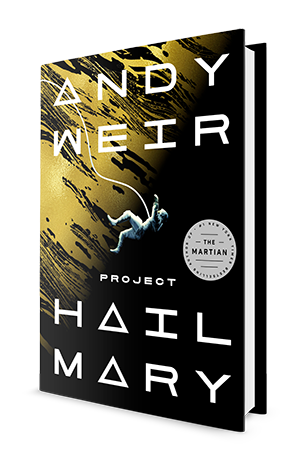
On March 20, “Project Hail Mary” was released to theaters. The film is an adaptation of Andy Weir’s 2021 novel of the same name. Both works follow Ryland Grace, a middle school science teacher and accidental astronaut, as he works with an alien friend named Rocky to save both of their home planets from sun-eating bacteria. Although the movie very closely follows the events of the book, there are a few key differences that set them apart.
First of all, the book details a lot more of the scientific approaches Grace takes. For example, the protagonist, played by Ryan Gosling, begins both stories by waking up from a coma with memory loss, where he has to figure out where he is in space and what his goals are. In the movie, Grace simply looks at a map and realizes the star he sees isn’t the sun. However, in the book, he conducts an experiment to find the force of gravity, which makes him realize he is not on the Earth. This sequence is just one of many where Grace experimentally or scientifically solves a problem in the book, while the same issue is quickly reasoned through in the movie. Although I miss the detailed scientific reasoning that the book explores, I overall think it makes sense to cut these out in order to appeal to a larger audience.
As both stories progress, Grace begins to regain his memories, allowing the audience to discover the purpose of his interstellar mission. An alien bacteria called Astrophage has been consuming the Sun’s energy and dimming it, resulting in climate catastrophe on Earth. Grace works together with scientists from around the world to execute Project Hail Mary, the scientific expedition to save Earth. In the book, almost all of these scientists have names, distinctive characteristics and key contributions to the project. Grace also works with a wide variety of scientists in the book, including a doctor and climate scientist. However, most of these characters were cut out of the movie, or reduced to nameless background characters. Grace had entertaining interactions with these characters in the book, so I was sad to see they didn’t make it into the movie. This may have happened because the film directors did not want to make the movie too long. This being said, I would have gladly watched a longer movie if it meant including these engaging characters.
Further into both stories, Grace encounters a strange ship and befriends its inhabitant, an alien creature called Rocky. In both works, Rocky is very lovable and endearing, but the film shines in particular when it comes to his characterization. The puppeteers that brought Rocky to life in the movie used body language, movement and posture to portray Rocky as a lighthearted, funny and compassionate friend. Through the film, the audience could form a deeper connection with Rocky that was not possible in a written format. In addition, similarly to how the book contains more science throughout, it also explores Rocky’s internal biology and the nuances of his species in much greater detail. While this change may seem insignificant, it lays the foundation for the climax of the novel, which was by extension altered in the film.
Overall, both the “Project Hail Mary” book and film were excellent and incredibly enjoyable. If you enjoy science and problem solving, definitely read the book to get all of those details. If you prefer a more emotional and condensed story, the movie adaptation is the way to go. However, for the full experience, I would highly recommend checking out both works.