

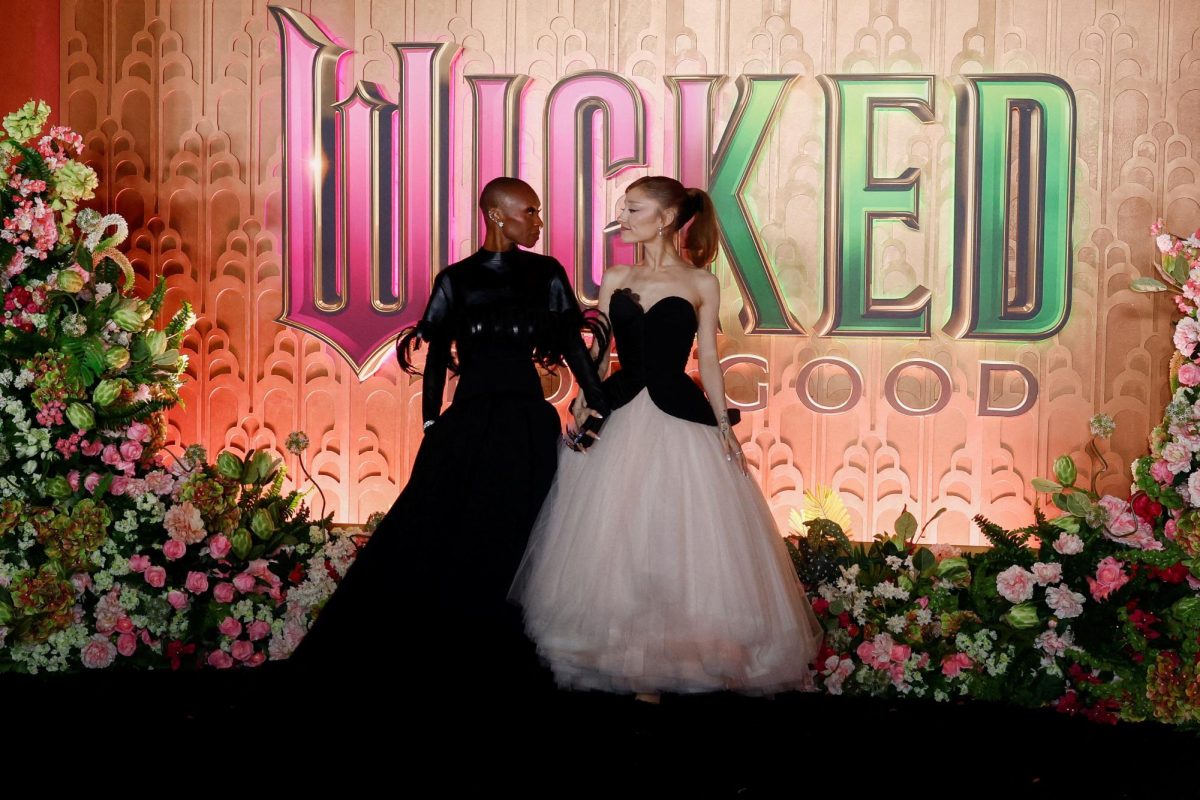
On Nov. 21, the long-awaited sequel “Wicked: For Good” hit theaters. Compared to “Wicked,” which had overall positive reviews, fan reception has been divided on “Wicked: For Good,” with some fans feeling that it did not compare to the first movie in both music and overall plot. I, on the other hand, found “Wicked: For Good” to not only be better than the first movie, but also to develop some of the principal themes of the narrative that I felt were lacking in the first film.
While “Wicked: For Good” is the superior film, I can acknowledge that a lot of the musical elements in the first movie are very impressive. In “Wicked,” there are a plethora of songs that show off the musical talent of the entire cast, specifically highlighting Cynthia Erivo and Ariana Grande’s voices. “Defying Gravity” was one of the most impressive songs of the film. Not only does it help to further develop Elphaba’s acceptance of her unique identity, but also reveals her magical abilities that will greatly impact her storyline in the second film.
A review from The Eagle sums up the importance of music throughout the film, stating that “Musically, it’s beautiful, but more importantly it shows viewers just how much Elphaba has sacrificed by not working with the Wizard, providing more context for her transformation into the Wicked Witch of the West.”
As for Ariana Grande, her rendition of “Popular” was an amazing performance that allowed viewers to further understand her character’s self centered nature that follows into the second film and sets the stage for later character development.
On the other hand, “Wicked: For Good” was much more crucial for developing the film’s characters that so largely influence the themes of the story as a whole. In the first movie, we learn the “why” behind a lot of characters’ actions that would otherwise not make sense without that previous context. However, the second film allows us to see these underlying motivations take action, which makes this sequel more engaging than its predecessor.
For example, in the first film, we learn that Nessarose, Elphaba’s sister, is in love with a character named Boq. However, it is not until the second film that we see Nessa as Governor of Munchkinland and her congruent shift to evil because of Boq not sharing her feelings; ultimately leading her to force Elphaba to turn him into the Tin Man. Nessa’s character development thus helps the audience feel more sympathetic toward Boq’s motivations for campaigning against Elphaba and sets the stage for an entertaining and satisfying ending to the films.
More importantly, “Wicked: For Good” reveals a lot more about the story’s themes of power and oppression than the first movie did, most notably through Elphaba and Glinda’s unique dynamic. Throughout the first movie, Elphaba explicitly faces a lot of discrimination because of her green skin. While in “Wicked,” we are made to believe that Glinda opposes the prejudice that Elphaba faces, in “Wicked: For Good,” it’s clear that Glinda’s desire for power often overrules her assumed sense of justice. Rather than using her platform as the Good Witch to defend Elphaba and stop her persecution, she comes to the conclusion that it’s necessary for some people to be ‘bad’ so that others can be ‘good.’ Moreover, the Munchkins in the film also face a level of oppression as they are trapped within the confines of Munchkinland and subject to propaganda against the Wicked Witch. Their role in the movie shows how large-scale discrimination can influence different oppressed groups to work against each other rather than coming together in solidarity against the forces that keep them as an underclass.
While many viewers tend to overlook the importance of “Wicked: For Good,” the inclusion of character and thematic development made the movie worthwhile. Instead of simply being a musical that shows off the voices of different broadway stars, “Wicked: For Good” allowed me to connect more deeply with the character and feel a sense of purpose behind the music. Because of this, “Wicked: For Good” is not only underrated, but also taken for granted by fans of the “Wicked” franchise.





Jayden M. • Dec 17, 2025 at 2:44 pm
Your discussion of oppression, power, and the character dynamics between Elphaba and Glinda really elevated this review. This was a very engaging read and sharp analysis!