On Saturday, April 25, a man named Cole Allen broke into the Washington Hilton Hotel during the White House Correspondents dinner. He was armed with a shotgun, a pistol and several knives and has since been indicted by a federal grand jury on four charges, including attempting to assassinate the President. Although the hotel was evacuated and there were no deaths, the incident has dangerous implications for America.
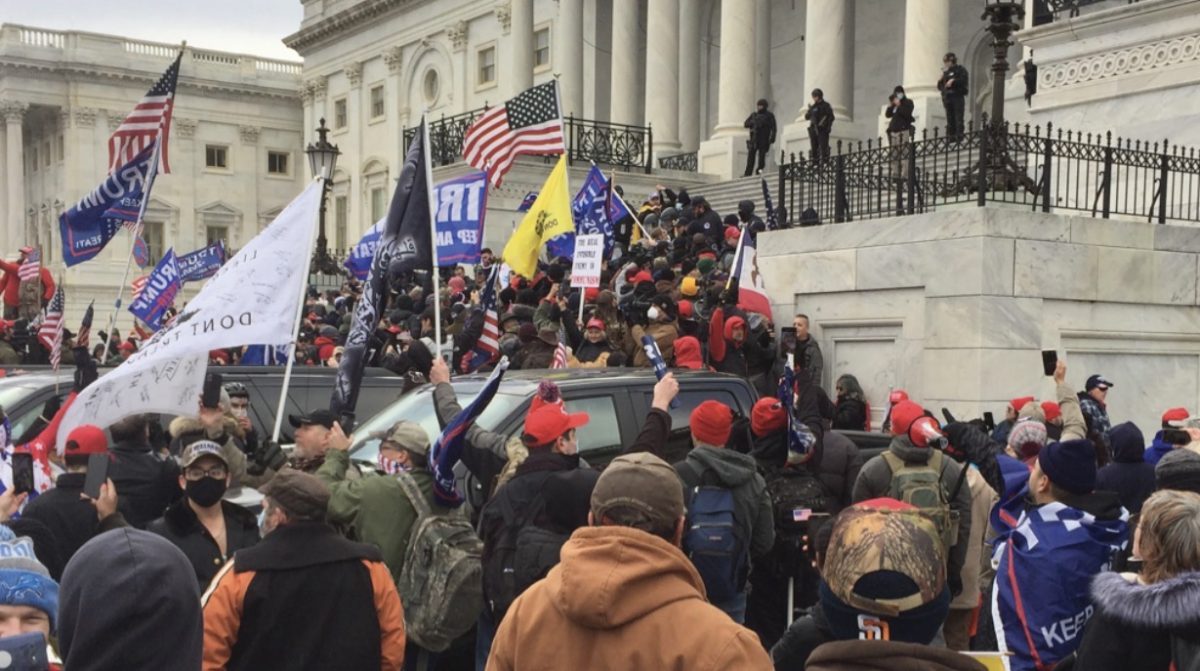
Political violence occurs in many forms. Much of what we see in the news involves rioting or individual civilians shooting at politicians and their supporters, but government-sponsored activity like police brutality also qualifies. It has been a significant part of American politics since the days of the colonies, from the Boston Massacre, to the Jan. 6 riot, to the Charlie Kirk assassination. Both parties have been at fault throughout history, and both have called for an end to the violence. Considering how charged our country’s political climate is already without the unease and blame violence adds, this call for peace should be a top priority.
One of the biggest problems with political violence is that it leads to deeper polarization between parties. In fact, one study found that as much as 73% of Democrats and 72% of Republicans attribute most political violence to the other party. This reinforces the dislike members of opposite parties feel for each other—even though they may actually agree on some issues—called affective polarization. Party leaders also jump at the opportunity to “justify” their attacks against the opposition. Politicians often use their opponent’s supporters’ violence to paint them as fundamentally evil and dangerous, not just someone they disagree with when it comes to policy. Another contributor to affective polarization, this can lead to each party adopting dehumanized views of the other, thinking of them as monsters and enemies of democracy rather than fellow citizens. These views can fuel more violence, resulting in an endless cycle.
Another impact of political violence is that it discourages politicians from speaking up about important issues. Many recent acts of political violence were perpetrated against well-known, vocal government leaders such as Nancy Pelosi’s family and Donald Trump, rather than less prominent politicians and influencers. The frequency of political violence exudes the impression that being involved in policy automatically comes with danger. While the fame that politicians have is naturally accompanied by widespread criticism, violence is an additional factor that can deter people from jobs related to politics. These jobs are incredibly important to maintaining a high-functioning government, and qualified people should be encouraged to partake in them. What’s more, everyone should feel comfortable sharing their political beliefs without fear of physical consequences. Many American values were built on the idea of respecting different opinions, and political violence directly undermines that idea.
The increasing amount of political violence also has effects beyond politics itself. It is part of a surge of violence that Americans have gotten used to. This is especially dangerous for American children, who grow up surrounded by anger and hatred at such a high level. Hearing about these things can cause intense anxiety and fear, as well as behavioral problems, all of which can last for years or even lifetimes. It also suggests that violence is normal and even acceptable, which negatively impacts all age groups. This desensitization weakens the emotional response to violence, priming people to become more violent themselves and further driving political violence.
Throughout American history, political violence has been used as a means to control and silence people, but in reality, it only breeds more hostility. No one should have to live in a country where violent protests and shootings motivated by politics are so common. The rise in political violence over the past several decades isn’t indicative of a more outspoken, engaged population; it is the result of an increasingly unstable and divided society, and it has to stop.