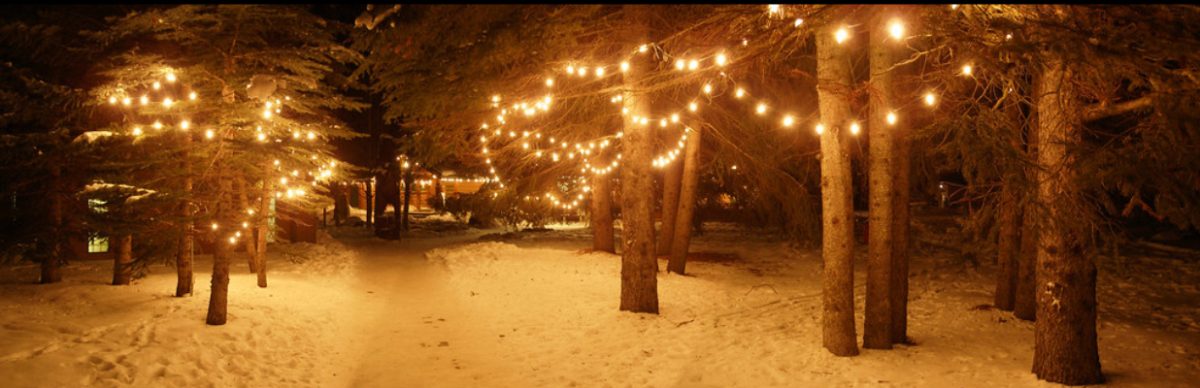
Christmas is here! Often called the most wonderful time of the year, there’s something extra special about the joy of the holiday season. Winter may be dark and cold, but our festive spirit brings light and warmth, making Christmas one of the most magical holidays. However, once January comes, the light fades and the harsh reality of the bleak winter comes into focus. But does this have to be the reality? What if the light and joy of the Christmas season could last a little longer? It is surprisingly easy to achieve; simply leave your holiday lighting through January.
Christmas light displays are a classic part of the December holiday. In my neighborhood, nearly every house has some sort of colorful lighting strung among its trees and bushes. Some families even put up inflatables, such as a snowman or reindeer. My favorite holiday lighting display is the projector that displays snowflakes or candy canes drifting across the house it’s placed in front of. By leaving these lights out through January, we can prolong the festive spirit they carry, allowing for additional joy during the desolate winter.
Many people oppose leaving Christmas lights out for extended periods of time. Outdoor lighting is known to have negative effects on wildlife, which is a major downside to their continued use. These effects, however, are easy to mitigate. According to Utah State University, many of the adverse effects of holiday lighting can be avoided by turning lights off when you go to bed. Additionally, colored lights are less disruptive to wildlife, so swapping bright white lights for lower-intensity colored ones is beneficial. If we take these steps to reduce the negative effects of Christmas lights, then we can enjoy the holiday spirit they bring into January without harming necessary wildlife.
Furthermore, a common argument against holiday lighting is the cost associated with them. However, by using the right type of lights, the cost associated with them is negligible. LED lights use 90% less energy than traditional lighting, at only 4.8 watts. If lights are turned on at sunset and turned off at bedtime, they would be running for no more than 6 hours every day. Christmas lights are therefore using 0.03 kwh per day. For reference, the average American household uses 30 kwh each day. When using LED bulbs, holiday lighting accounts for only 0.1% of total electricity use, an incredibly slight increase that is easy to accommodate for one extra month. Therefore, any cost concerns associated with extended use of Christmas lights are unfounded and completely ignorable.
To conclude, there are what turn out to be insignificant downsides to leaving Christmas lights up through January. Any negative effects of holiday lighting on wildlife can be easily avoided, and energy costs are negligible when using the correct type of bulbs. When outdoor lights are left up for longer, it brings more happiness and holiday cheer into the bleak winter. Why not help add a little more joy into our lives when there is such little cost?