As high school students, we spend seven hours a day at school constantly learning, taking tests and trying to understand difficult topics. Classes start early at 7:30 a.m. and end at 2:30 p.m., and that does not include after school clubs, sports and volunteer work. Students contribute much to the school community through academics, athletics and leadership. Shouldn’t all of this justify access to free lunch as a necessity? Free school lunch should not be about income and eligibility; it should be about giving every student the fuel they need to succeed.
It currently costs $2.85 for students at Manheim Township high school to buy a lunch. That might not sound like much, but in the long run, it adds up. For students who are not able to pack lunches, buying a school lunch at this price every day of the school year costs a minimum of $513. In this current economy, $513 can go a long way. However, some students can qualify for a free or reduced lunch. For the average family, which is about four people in a household, a total salary of $59,478 or less is considered eligible for free or reduced meals. Another immediate qualification is if a household is receiving SNAP (supplemental nutrition assistance program), TANF (temporary assistance for needy families) benefits, or meets the definitions of homeless runaway or migrant. But what about the ones who cannot qualify? If you do not qualify for a free or reduced lunch, it does not necessarily mean you are rich or well-off. It simply means you do not qualify for the school’s income cutoff. Many important expenses like groceries and gas are made constantly, and even with a steady income, these prices added up can be a heavy burden. With the current economy’s state, the average cost for groceries is $504 per month and the average cost of gas is $130-$200 per month. If school lunches were free, the $85.50 minimum that students spend for a 30-day period of getting lunch daily could be used to pay for some of these other necessities.
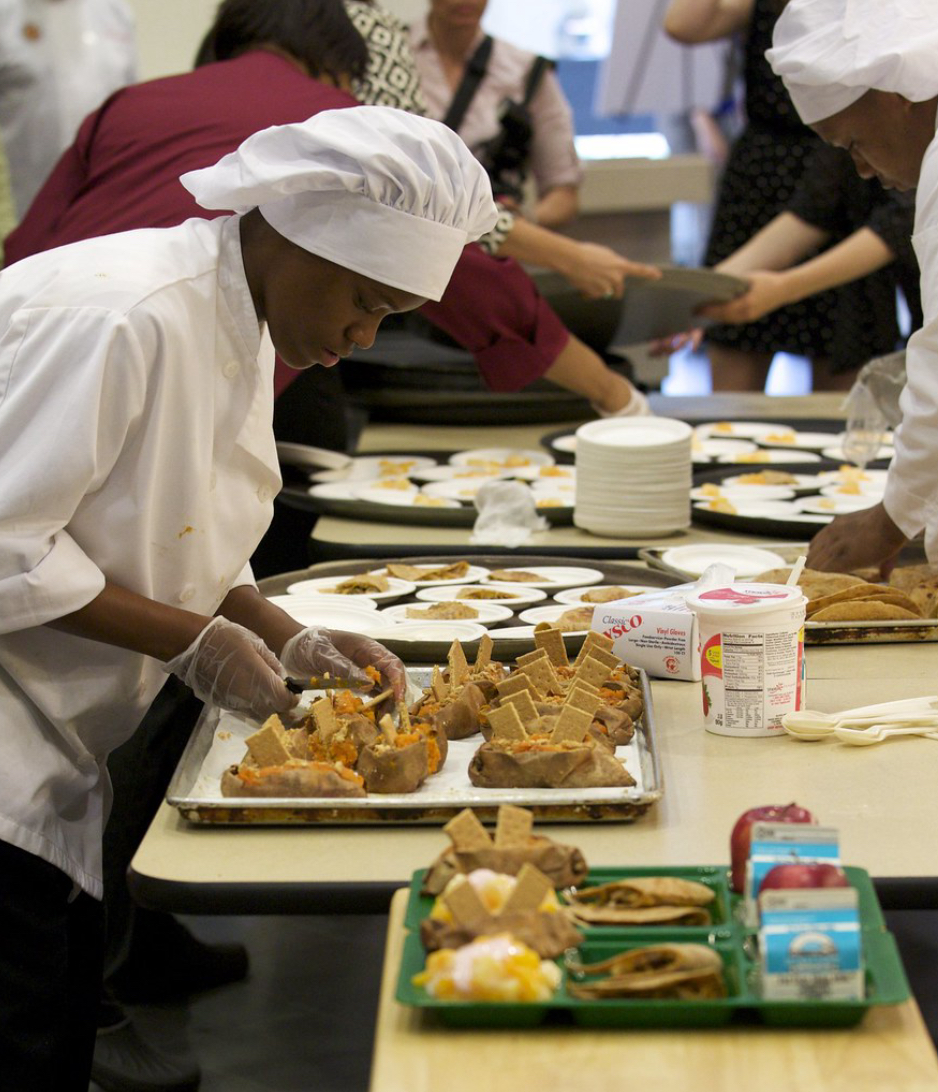
A school lunch at MT includes the main entrée, two vegetables, two fruits and a milk. Extra snacks and drinks range from $0.50 to $3. If a student isn’t satisfied with the amount of lunch given on a specific day, their meal has the possibility of increasing to at least $3-$5. Not to mention there are also some days when a student will not like or cannot eat the selection given with fruits or vegetables.This gives way to the possibility that a student takes less food included in the lunch, and resorts to buying another snack, which would add to the total cost of a lunch. However, almost all of the students do not take advantage of the amount of food they can take that’s included in a lunch, and pay for what they aren’t choosing to take. All students should keep in mind what is included in the lunch they pay for.
This begs the question: why can’t school lunch be free for everyone? Most students spend the same seven hours a day in the same building, working on different lessons all with their own challenges. Through this, every student is using both physical and mental energy throughout the day. So, every student should have the right to eat school lunch. Every student should have the right to an accessible meal to allow them replenished energy for the rest of the school day. Of course, the price that students pay for school lunch goes back to the cafeteria, helping fund food, staff and other areas that impact the cafeteria. If school lunch were to be free, it would mean monetary sacrifices to be made that support the cafeteria. On the other hand, the district could possibly work around this by using community donations, fundraisers and students volunteering to help out in the kitchen or elsewhere in the cafeteria. The cafeteria could also still profit from the sale of snacks and extra drinks. In the end, this issue is about taking care of the students and giving them proper nutrients to get through learning.
Kelly Price, director of food services at MT, and Stacy Smith, administrative assistant of food services, gave their personal thoughts on free school lunch and more information about the processes that happen behind the scenes of the cafeteria. Both women noted that the current price of a school lunch is exceptional. Furthermore, Price commented that with the current prices of food currently, the price of school lunch is pleasant, given it’s an entire meal for $2.85.
“I think that it’s really cool you can walk in the cafeteria and get an entree, two fruits, two vegetables, and a milk for under $3,” Price said.
In this aspect, I do agree that the price of a lunch is impressive considering inflation. She also mentioned that it would be lovely if all students took advantage of what comes in a meal. Both Price and Smith wanted families to also know that local taxes do not go toward the cafeteria, which is a common misconception. So when making a decision like free school lunch, it’s important to note how much a lunch funds the expenses for the cafeteria. However, as a positive toward free lunch, both of them said that a free lunch would reach out to more students who may be afraid for whatever reason to buy lunch.
“It would be nice and it would take away any stigma for any free or reduced issues we have,” Price said.
Based on a poll given on the Township Times Instagram page, out of 99 people, 68 stated that they buy school lunch and 31 stated that they do not. However, when asked if they would buy school lunch if it were free, out of a total 97 students, 90 voted yes and seven voted no. This poll suggests that more students would take the opportunity of buying a school lunch if it had no cost.
If school lunch were free, it could ease the stress of packing lunch every morning or skipping lunch altogether. The school offers a variety of food, so students could actually enjoy good, hearty meals without the extra cost. Even for families who can afford to pay, free lunch would mean extra money saved. For example, money could go toward school supplies, transportation or extracurricular activities that often add up throughout the year. Making lunch free for everyone guarantees that every student has the opportunity to learn, participate and succeed with the energy they need.