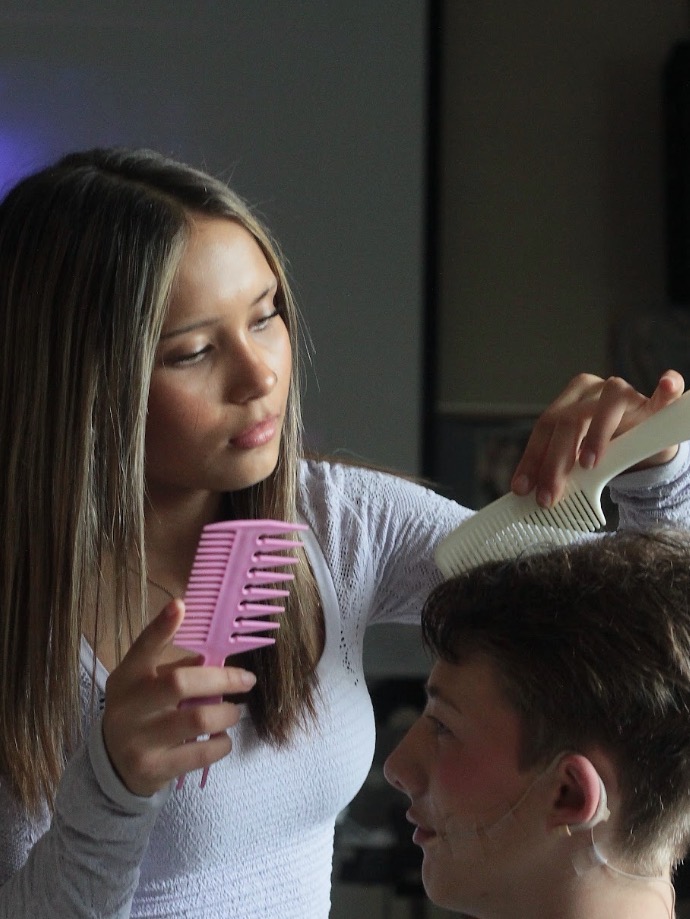
Ava Romero styles a performer’s hair. Some actors wear wigs while others get their hair styled before every performance.
There are six crews that work behind the scenes of every MTPA production: Build and Paint, Sound, Hair and Makeup, Stage, Light and Costume. These crews are responsible for every element of the performance apart from the actors themselves, and are a massive part of making MTPA shows as excellent as they are. Not to mention the talented pit orchestra that performs all the music throughout the show.
I’ve been involved in MTPA as an actor for two years now, in both the play and the musical. Although I’ve done build crew before, this spring I decided to try serving on stage crew, and it was eye-opening. Honestly I was surprised at how hard it was to coordinate moving the set pieces. But more than that, I got an understanding of how everything actually works during the production. There’s an entire world of students quietly running the show that is unknown to much of the student body.
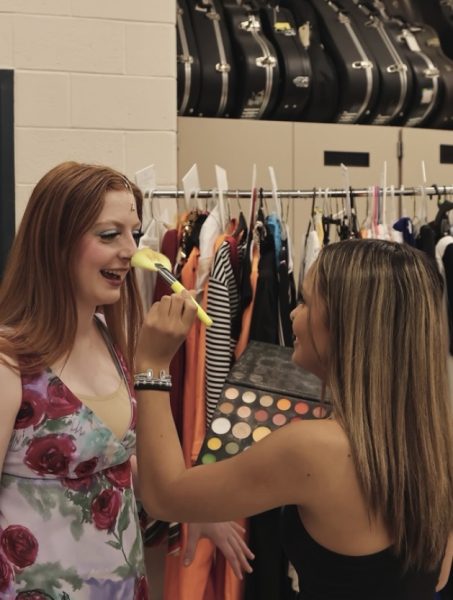
Hair and Makeup Crew:
A crew member applies blush to a performer’s face. Stage makeup must be darker and more dramatic than typical makeup in order to show up underneath harsh stage lighting.
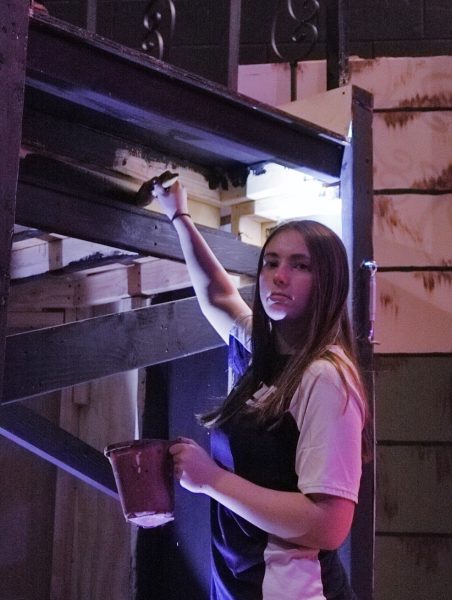
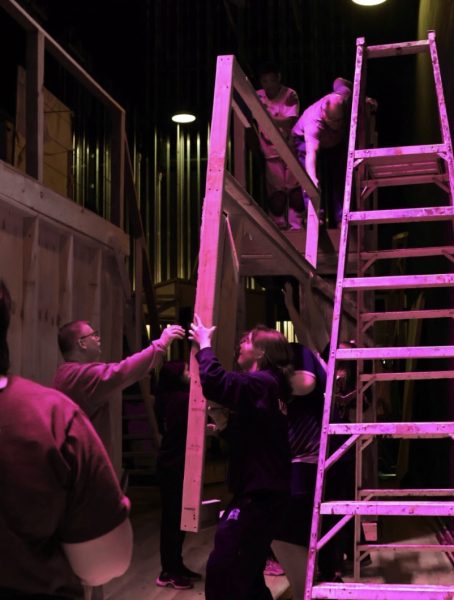
Build and Paint Crew:
Brynn Mcllvain paints the back of a large staircase. Students learn to operate power tools like saws and drills to construct the set pieces.Members of the build crew work together to lower a large wooden frame off of a 10’ platform. Every large set piece is constructed by the students by hand. Abigail Willoughby is pictured (center).
Costume Crew
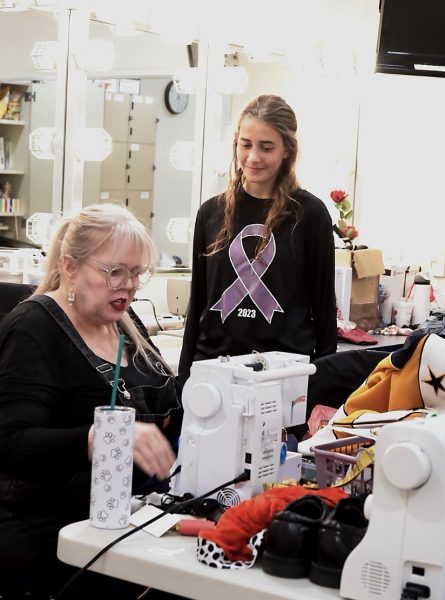
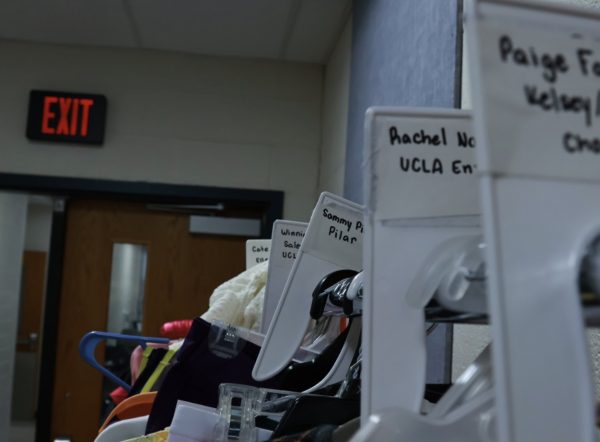
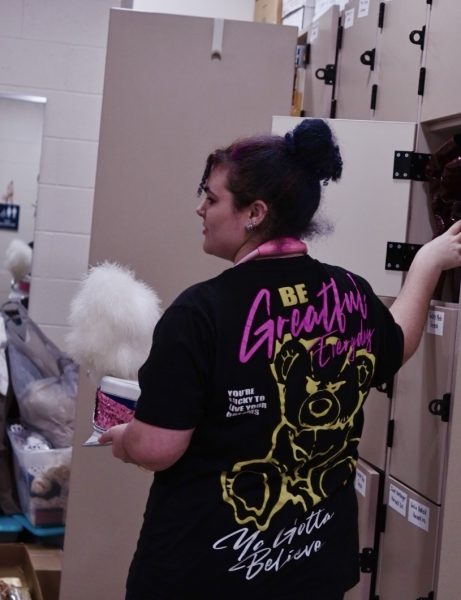
Ellie Blumenthal talks to Char Wilson, the resident costume designer who has 30+ years of experience in professional theatre. Every costume (100+) is styled by Wilson.The costume crew spends months sewing, tailoring, ironing and steaming costumes in preparation for the production. A labeled spot is made on a clothing rack for every actor, which is where the actors’ costumes stay when not in use.Khloe Rufano returning Elle’s marching band hat to her cubby. Each actor gets their own labeled cubby space for their costumes’ accessories
Light Crew:
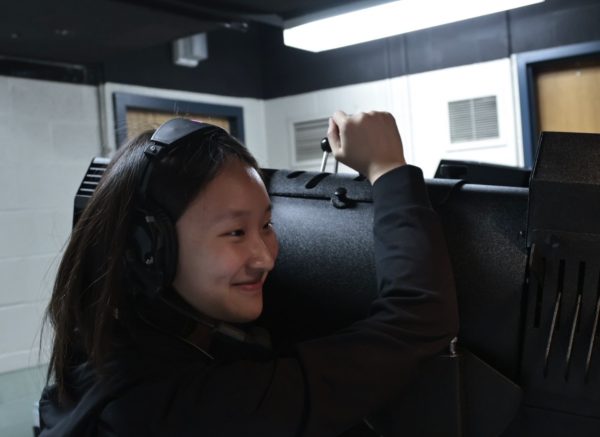
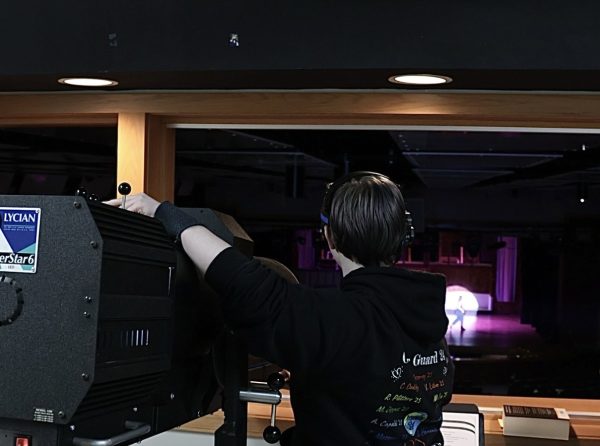
Spotlights are operated in real time by two light crew students. Hanna Zhu is one of two spotlight operators. The lights must be turned on/off and moved at precise audio and visual cues.Talon Meservey tracks an actor across the stage with the light. A door behind the sound booth leads up to the small spotlight room seated high in the back auditorium wall.
SoundCrew:
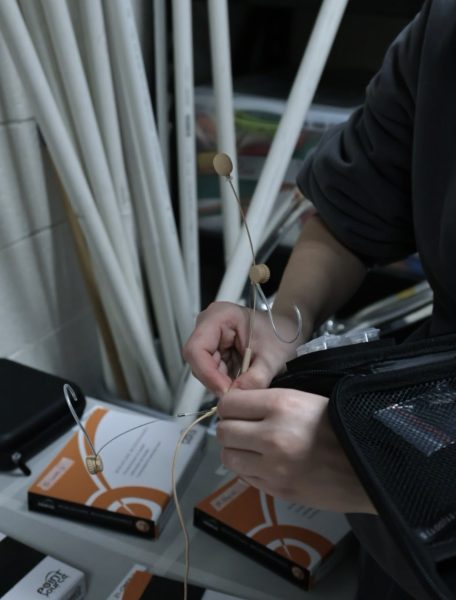
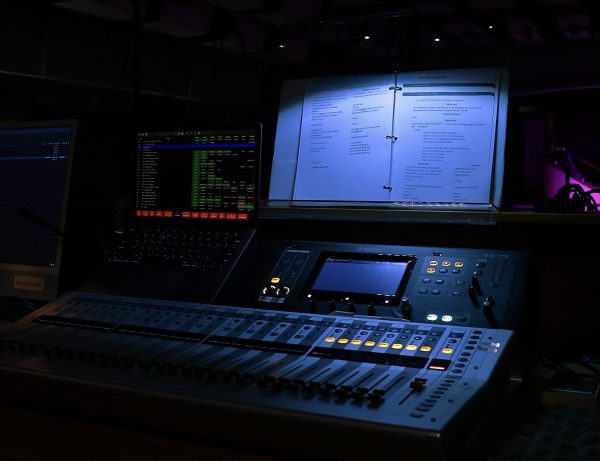
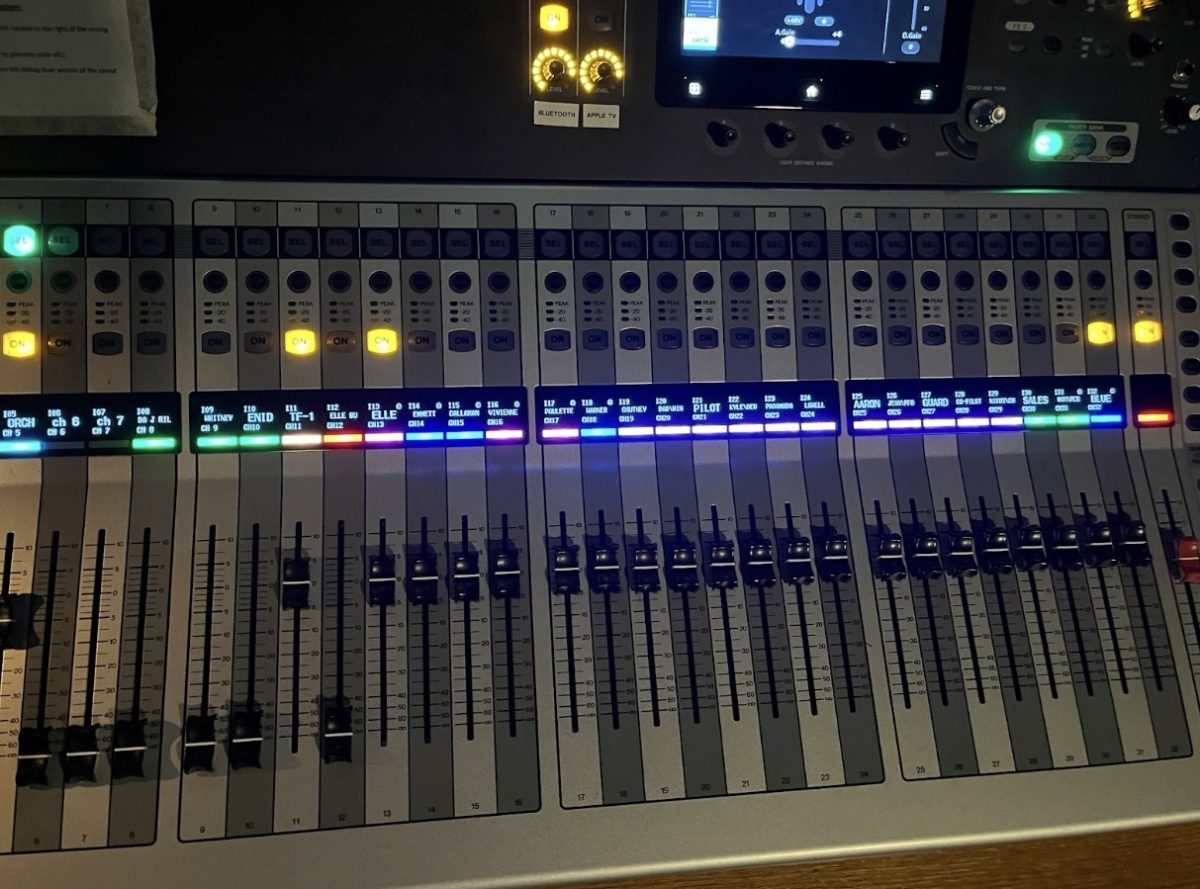
Jay Vedock removes mic tape from an actor’s mic. Each mic costs $500+ and is handled with extreme care. Actors are prohibited from taking their own mics on and off.A select few sound crew members work in the sound booth, controlling sound effects and mics. Like the spotlights, the timing is precise with little room for error.
Stage Crew:
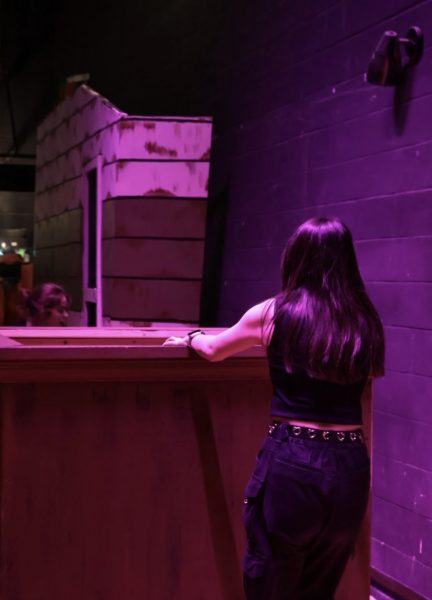
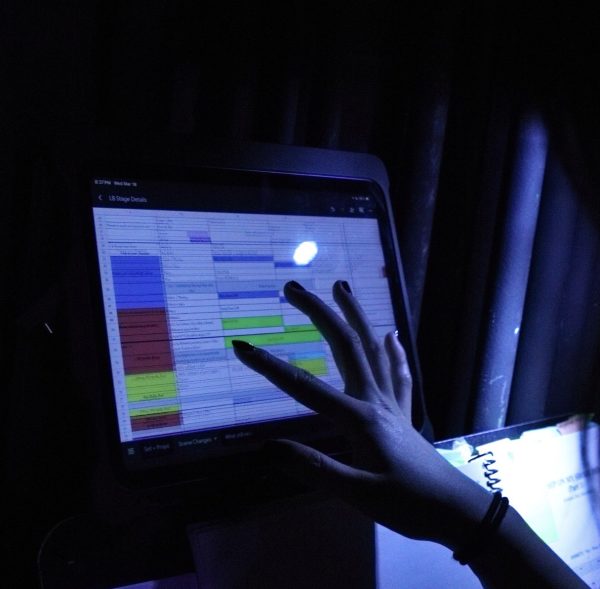
Fei Heagy, an assistant stage manager, moves the judge’s stand. Due to limited space, set pieces are often moved between one side of the stage and the other during the show to make room.A master document called a track sheet contains the movement of every set piece and prop throughout the show, scene by scene, cue by cue. They’re checked throughout the show to ensure that everything is prepared.
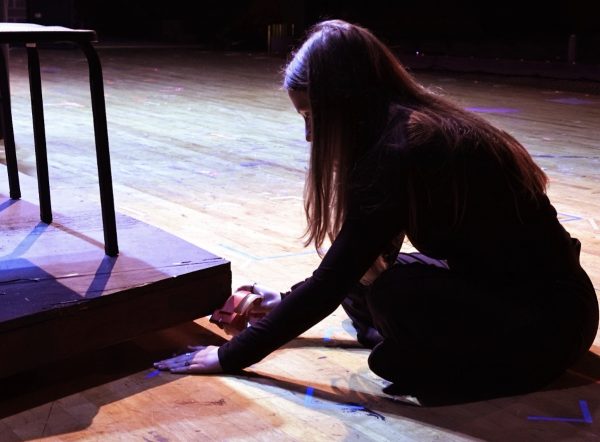
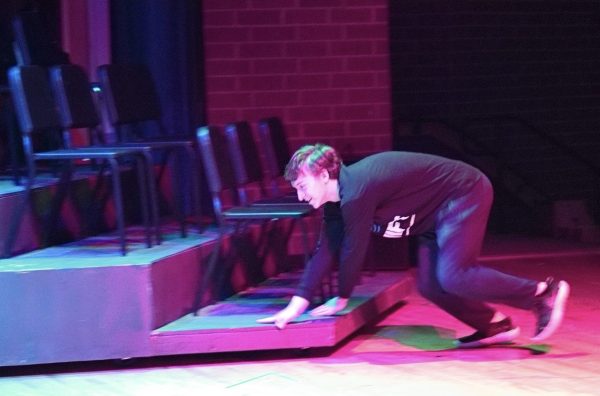
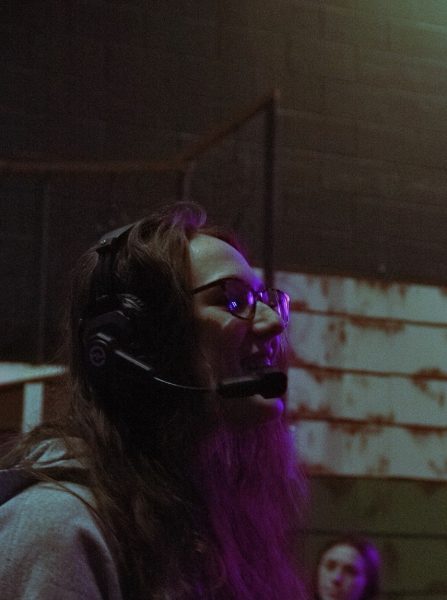
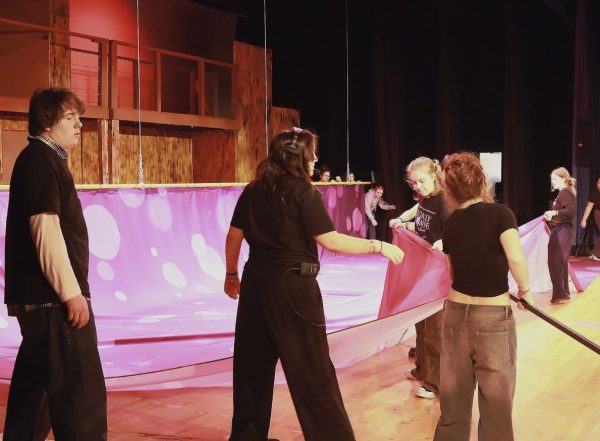
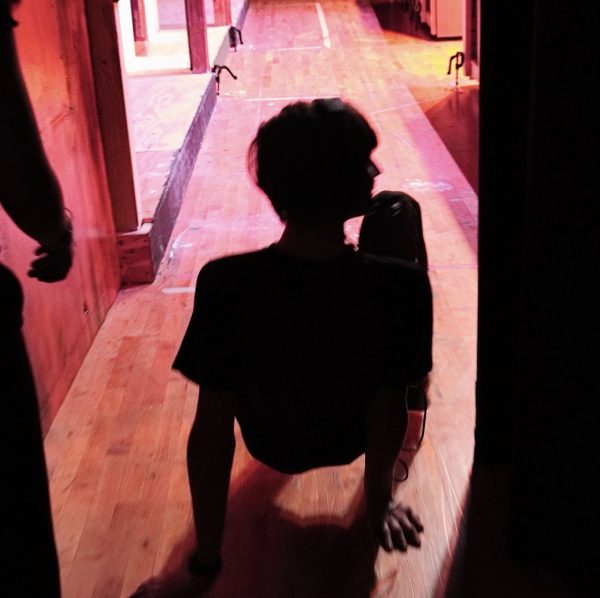
Molly McCardell, one of the production’s assistant stage managers, puts spike tape on the ground. Spike tape is colorful tape used to mark where large set pieces go on the stage to help stage crew put them in the same place every time.Noah Fenton pushes a large seat unit off the stage. Scene changes are often very fast and require a high level of coordination and teamwork to accomplish.Maddie Cranford, the production’s lead stage manager, wears a headset. Two other stage managers wear them as well as those in charge of important live cues, like those controlling sound and lighting. The headsets allow crews to be in instant communication with one another.Mel Gomez, a stage manager (center), helps the stage crew hang and install the pink backdrop used throughout the show. It is then raised and can be pulled up and down by a complex pulley system on stage right.Although working backstage is a stressful job, it’s not all serious. Stage manager Weston Groff crabwalks off stage after a scene change.
Pit Orchestra:
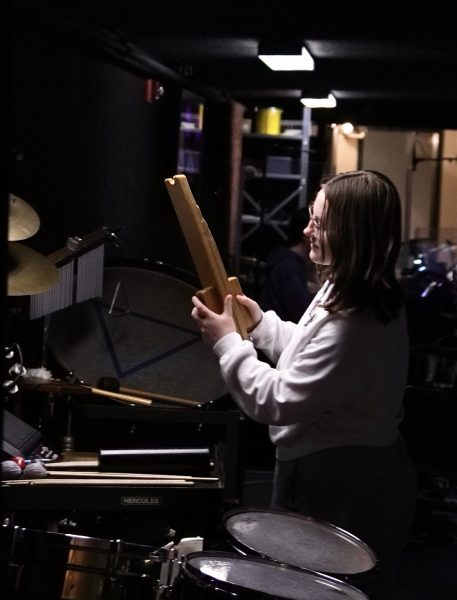
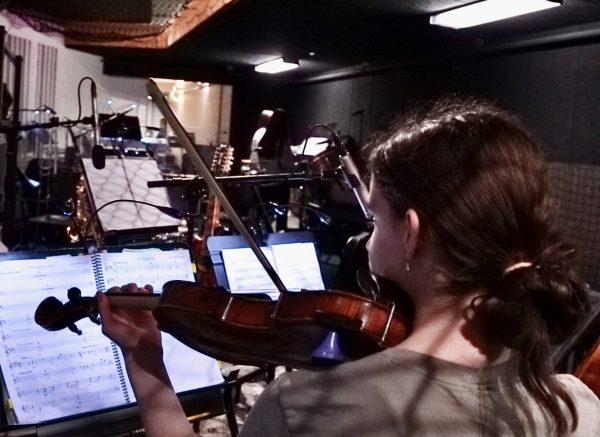
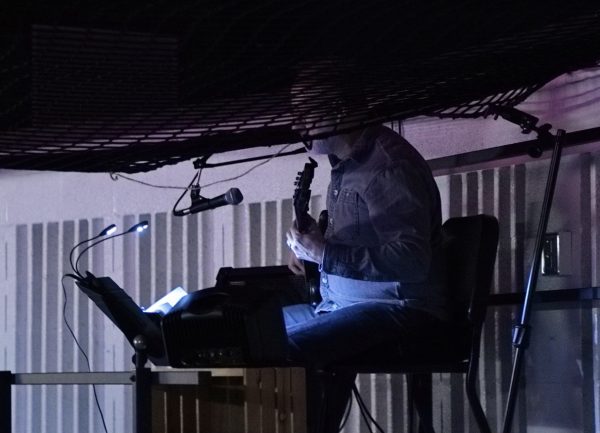
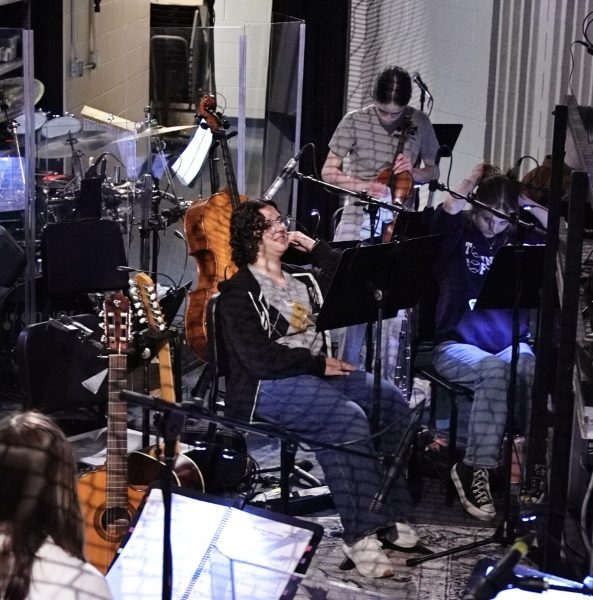
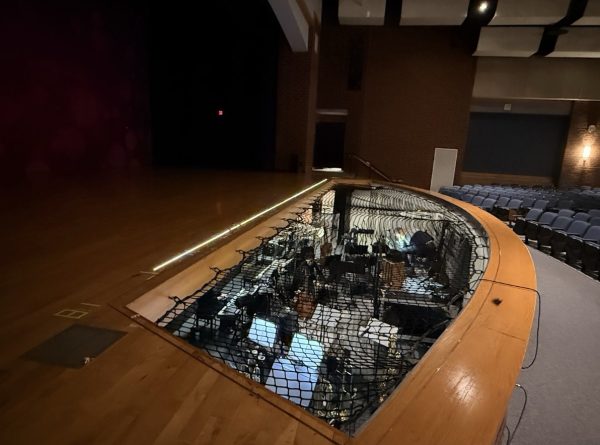
Lauren Riley, the auxiliary and mallet percussionist, uses a slapstick during “So Much Better.”Isabel Klimchak plays violin during rehearsal. The musicians have microphones attached above their music stands to amplify their sound.Mr. Caravella, the orchestra teacher, conducts the pit and plays the bass guitar. He sits on a higher platform to allow him to view both the orchestra and the on-stage action.If there isn’t a student available in the high school that’s able to play the music, professional musicians are hired to fill in. Melody Frias is pictured (center).The pit is opened up during the musical season. It’s covered with a net to prevent anyone from getting injured if they were to fall in.