In the early hours of Jan. 3, the United States placed an attack on Venezuela’s capital and arrested President Nicolas Maduro and his wife at their home in Caracas, Venezuela, charging them with a narcoterrorism conspiracy, cocaine import conspiracy and weapon offenses.
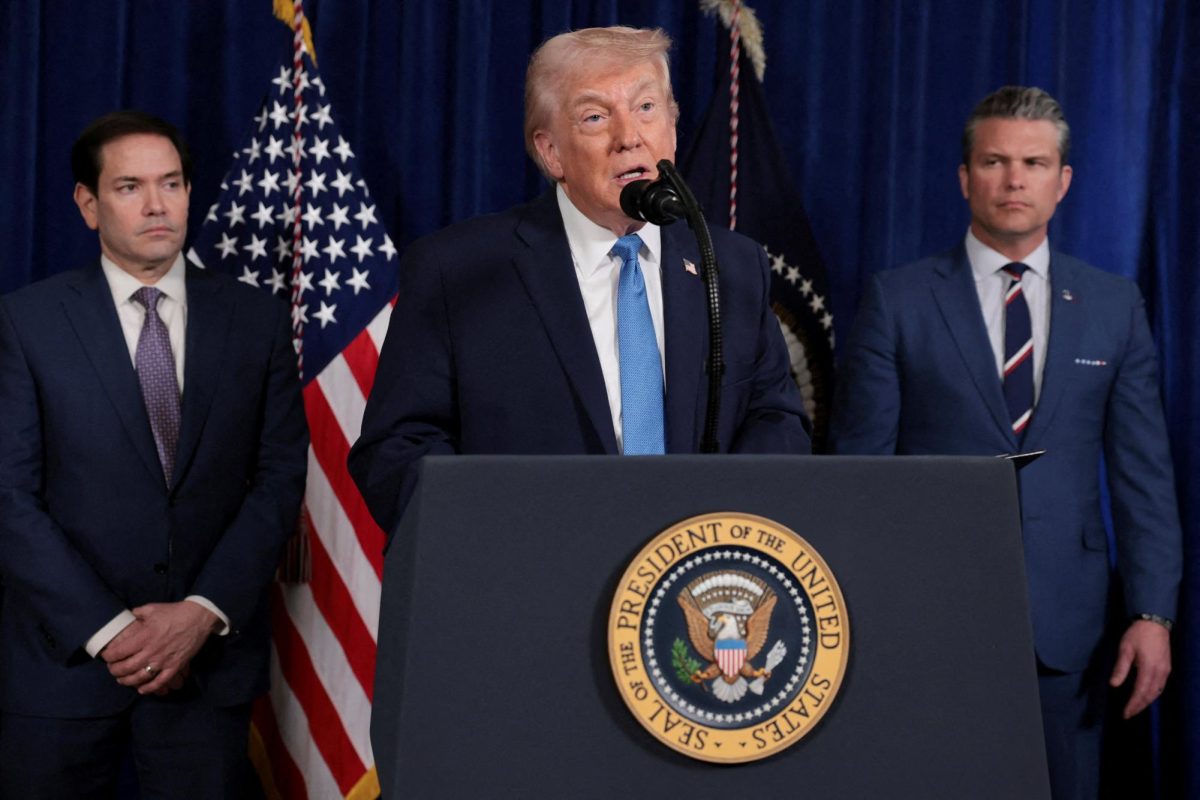
President Donald Trump held a press conference to discuss the arrests at 11 a.m. Saturday morning at his Mar-a-Lago estate. There, he discussed the reasons for the attack and what went into the planning of it. The President was quick to announce that the United States would be running the country of Venezuela until further notice, although the Vice President of Venezuela was sworn in as the interim president on Jan. 5. Trump also declared that they will be looking into tapping into Venezuelan oil reserves, which has raised the question to multiple lawmakers if that was an ulterior motive to Maduro’s arrest.
There have been varying reactions to the arrest, with some Venezuelans celebrating the possible end to Maduro’s authoritarian leadership and his alleged election rigging in the past. This has caused movement at the border of Venezuela and Columbia, with some Venezuelans coming back to Venezuela from seeking asylum in Columbia, and others coming into Columbia out of fear of more conflict and violence with the United States. This arrest has also posed questions for surrounding and allied countries of Venezuela.
Maduro’s arraignment was held this past Monday on Jan. 5, where he stated that he was kidnapped and a prisoner of war. He is currently being held in the Metropolitan Detention Center in Brooklyn.
This event has raised the question about Venezuelan oil, as the United States has begun to control their oil sales. This event has also started up the conversation about Greenland again.